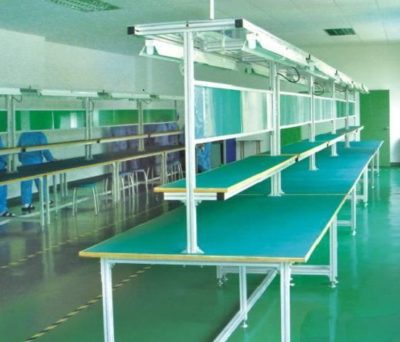
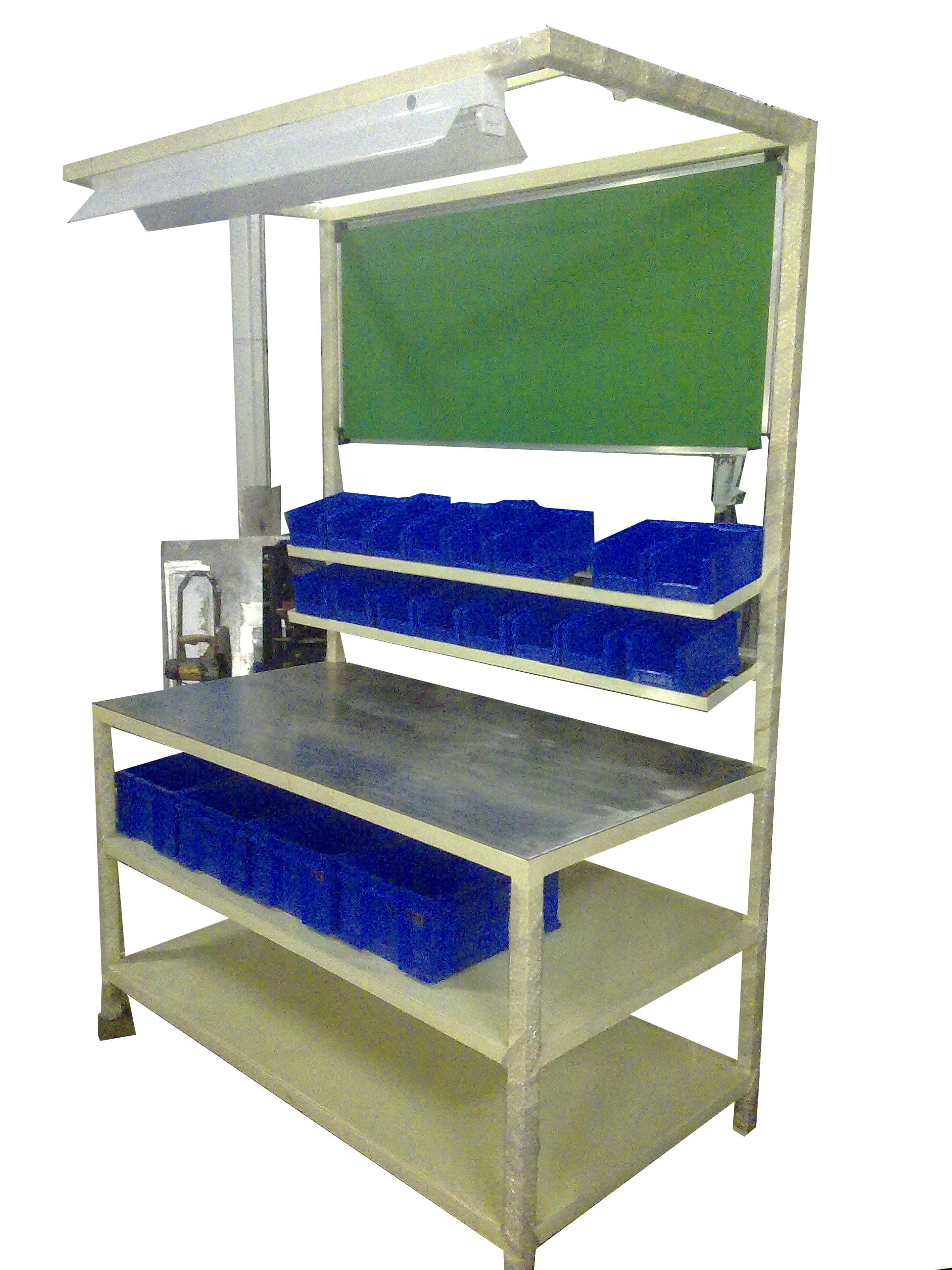
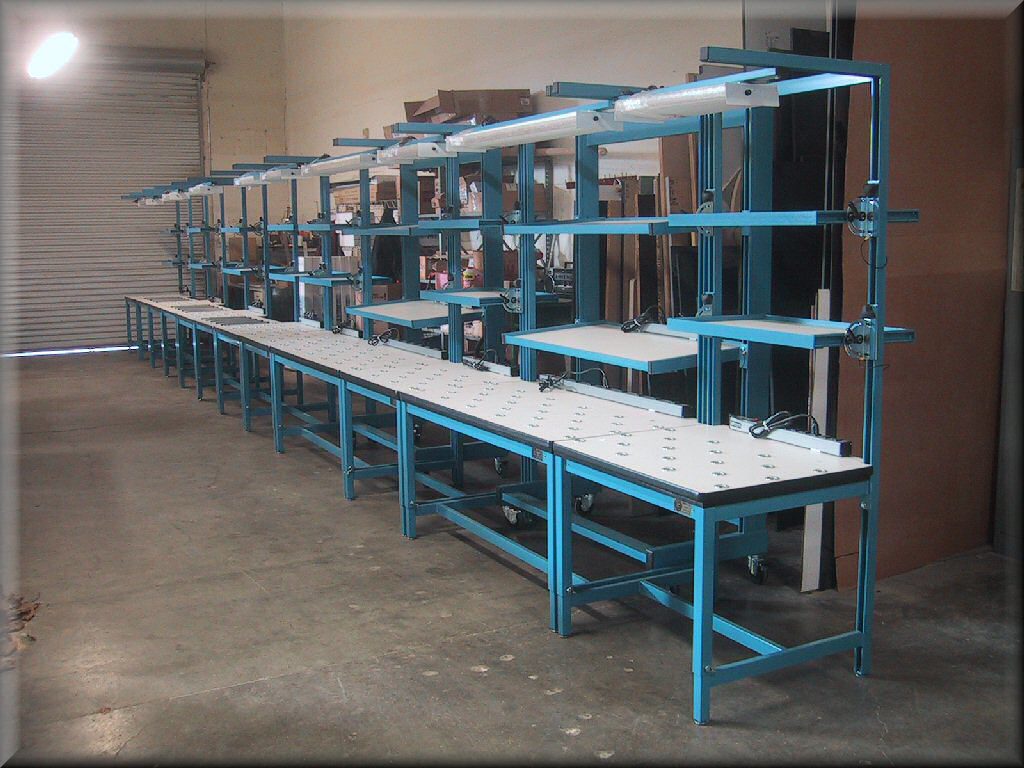
Industrial workstations engineered from structural steel and extruded aluminum profile systems provide flexible, ergonomic foundations for manufacturing, assembly, and production environments.
Material Comparison: Steel vs. Aluminum
| Parameter |
Steel Modular Workstations |
Aluminum Profile Workstations |
| Structural Integrity |
Extreme load capacity (1,000–3,000+ kg) |
Moderate to high load capacity (200–1,000 kg) |
| Weight & Mobility |
Heavy, highly stable; requires mechanical lifting to move |
Lightweight; easy to reconfigure or mobilize with castors |
| Joint & Connection |
Welded or bolted structural tubing |
T-slot extruded profiles with fastener brackets |
| Corrosion & Finish |
Powder-coated or galvanized surface protection |
Anodized aluminum with natural corrosion resistance |
| Flexibility |
Rigid base structures; adjustments require re-bolting/drilling |
Fully reconfigurable; accessories slide along T-slots |
| Best Used For |
Heavy machining, stamping, toolmaking, welding |
Electronics assembly, light manufacturing, cleanrooms, packaging |
Key Architectural Features
-
Modular Standardization: Standard grid patterns and profile dimensions (e.g., 30x30, 40x40, or 45x45 mm extrusions) allow rapid attachment of accessories without specialized machining.
-
Ergonomic Integration: Motorized or manual height-adjustment systems allow operators to switch seamlessly between sitting and standing tasks.
-
Utility Routing: Internal channels within aluminum profiles or integrated steel raceways house electrical wiring, pneumatic hoses, and network lines safely out of sight.
-
Lean Manufacturing Support: Integrated support for bin rails, tool balancers, overhead LED lighting, pegboards, and dynamic gravity-feed flow racks for FIFO material handling.